
The Ultimate Guide to Bibimbap: A Visually Stunning and Healthy Korean Mixed Rice Bowl
Bibimbap is one of the most globally renowned Korean dishes, famously loved by pop icon Michael Jackson and currently served as a premium first-class in-flight meal on numerous major international airlines. It boasts an intuitive name that combines the Korean words for 'mix' (bibi) and 'rice' (bap).
Featuring warm rice topped with a colorful array of seasoned vegetables, meat, and a perfectly cooked egg, this dish is dynamically mixed with spicy Gochujang (red chili paste) and aromatic sesame oil. It is a perfectly balanced, one-bowl meal that offers health benefits, visual beauty, and deeply satisfying fullness.
A History Steeping in the Philosophy of the Universe
The history of Bibimbap begins in Korea's traditional agrarian society. It originated from the practical custom of busy field workers mixing various side dishes into a large brass bowl for a quick, hearty meal. It also stems from a heartwarming communal culture where, after ancestral rites (Jesa) or holidays, families would mix the precious leftover seasoned vegetables and share them from a single bowl.
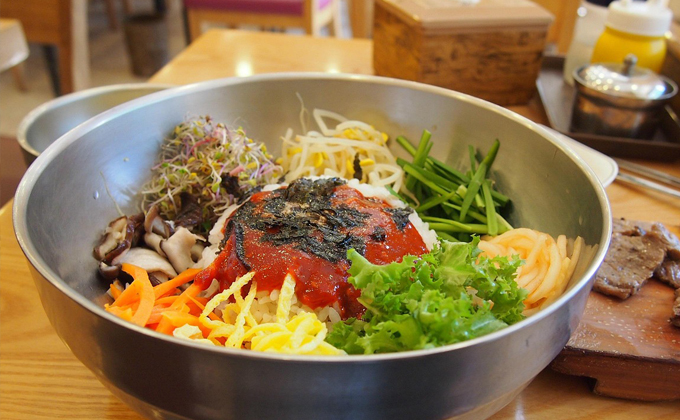
Over time, it evolved uniquely in different regions by incorporating local specialties. Most notably, 'Jeonju Bibimbap'—which features rice cooked in rich beef bone broth topped with vibrant fresh beef tartare (Yukhoe) and mung bean jelly—is widely recognized as a top-tier regional Korean delicacy that any true food lover must experience.
A Symphony of Flavors Created by the Perfect Mix
When Bibimbap is placed on the table, you are first captivated by a visual marvel created by the traditional Korean "Obangsaek" (the five cardinal colors: white, black, blue/green, red, and yellow), which symbolize the harmony of the universe and nature. It is truly a dish you feast on with your eyes before mixing.
The balance of textures is equally outstanding. The crunchiness of carrots and soybean sprouts, the chewiness of shiitake mushrooms and beef, and the velvety softness of a soft-boiled egg play a perfect symphony in your mouth. The magical "cheat codes" that bind these countless ingredients into a single, unified flavor are 'Gochujang' (Korea's fermented chili paste) and the intense, nutty aroma of 'Sesame oil'.
A Practical Gourmet Course from a Traveler's Perspective
For travelers unfamiliar with the Korean dining culture of being served numerous small side dishes (Banchan), Bibimbap, where everything is neatly organized in one bowl, is the safest and most excellent menu choice with an almost zero chance of failure.
Jeonju Hanok Village Gourmet Tour
Take a train trip to 'Jeonju', hailed as Korea's ultimate gastronomic city. Stroll through the antique streets of the Jeonju Hanok Village and step into a traditional restaurant. Order the 'Jeonju Bibimbap' served in a gorgeous brass bowl, and you will experience the ecstatic, authentic taste of Korea alongside dozens of exquisite side dishes.
Opt for Dolsot Bibimbap for Lasting Warmth
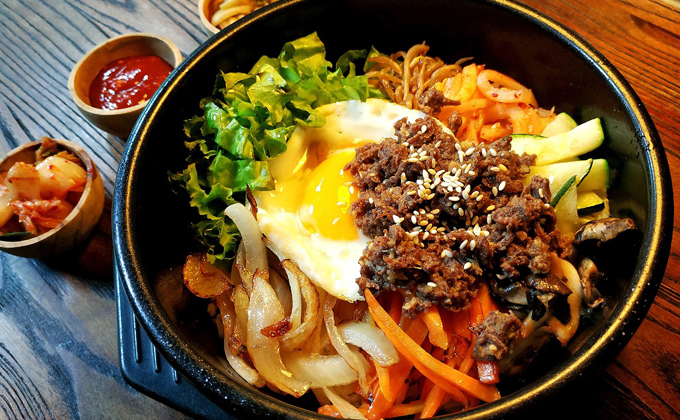
If you prefer a piping hot meal, try ordering 'Dolsot Bibimbap' (Stone Pot Bibimbap). Served in a heavy stone bowl heated over an open flame, it retains its heat until your very last bite. Scraping up the crispy, toasted rice (Nurungji) stuck to the bottom of the pot is a delightful privilege exclusive to Dolsot Bibimbap.
Mix Passionately with a Spoon
Many foreigners try to eat the rice and vegetables separately with a fork to avoid ruining the beautiful plating. However, the true flavor explodes only when it is 'perfectly mixed'. Grab a round Korean-style spoon instead of chopsticks, and passionately and boldly mix all the way down to the bottom of the bowl so the rice grains and vegetables don't clump. Taking a massive, mixed bite is the golden rule of dining like a local.
Dining Tips to Keep in Mind
Gochujang, the core sauce of Bibimbap, can be quite spicy for some palates. If you are sensitive to heat, it is wise to tell the server when ordering, "Please serve the Gochujang separately on the side" (Gochujang ttaro juseyo), allowing you to control the spice level yourself.
Furthermore, Bibimbap is a fully customizable dish. Global vegan travelers or those with specific dietary restrictions regarding meat can easily ask to omit the meat or egg upon ordering, making it a comfortable and enjoyable meal for absolutely everyone.
Key Takeaways
- As one of the most globally recognized Korean dishes, it is a highly nutritious meal packing rice, meat, and colorful vegetables into a single bowl.
- It boasts outstanding visual beauty, neatly presenting the five traditional colors (Obangsaek) that reflect the philosophy of nature.
- You must add generous amounts of spicy Gochujang and nutty sesame oil, and enthusiastically mix it with a spoon to bring out the perfect harmony of the natural ingredients.
- If you crave a crispy, toasted rice texture and a meal that stays warm, the heated 'Dolsot Bibimbap' is highly recommended.
- It is incredibly easy to order without meat, making it highly vegan-friendly, and you can easily manage the spice level by requesting the chili paste on the side.