
The Ultimate Guide to Samgyeopsal: The Essence of Korean Social Dining on a Sizzling Grill
If you want to experience Korea's dynamic nightlife in the most intuitive way, you must head to a local restaurant alley lined with round tin tables. There, you will witness Korea's unique social dining culture, where coworkers and friends gather after work to grill meat, clink glasses, and share heartfelt conversations.
The absolute star at the center of this scene is 'Samgyeopsal'. This dish, which refers to pork belly, might look somewhat similar to Western bacon, but it is an entirely original Korean barbecue system where thick slices are grilled directly on a hot iron plate at your table. We introduce you to the fascinating world of Samgyeopsal, a dish that overwhelms diners with both its taste and its vibrant atmosphere.
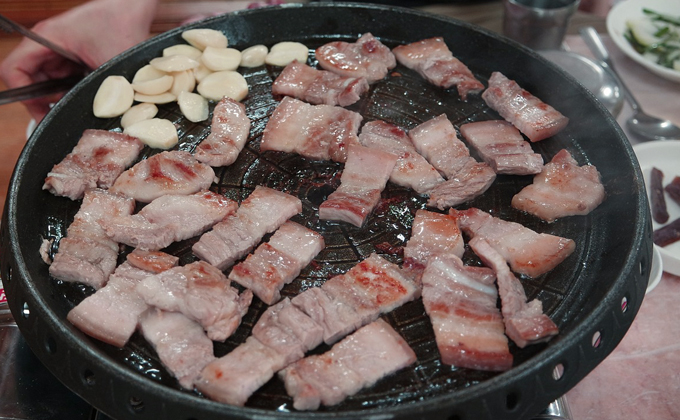
From Industrial Energy Source to a Global BBQ
The history of Samgyeopsal BBQ, which the whole world is now enthusiastic about, is deeply connected to Korea's industrialization era of the 1960s and 1970s, a period of rapid economic growth. Back then, laborers sweating at construction sites and factories needed protein that could quickly and affordably replenish their high-calorie needs.
At that time, the pork belly cut—which was cheap and easy to obtain—perfectly satisfied their hunger. A hearty meal for commoners, grilling meat on an iron plate and sharing a shot of Soju to relieve fatigue at the end of a hard day, has firmly established itself today as the signature menu representing Korean 'Hoesik' (company dinners) and a renowned global gastronomy.
'Crispy Outside, Juicy Inside' and the Aesthetics of Ssam
The name Samgyeopsal literally translates to meat and fat consisting of "Three layers". This unique structure works magic on a scorching hot grill. The white fat melts down into clear oil, practically frying the exterior of the meat in its own juices.
As a result, it achieves a perfect "crispy on the outside, juicy on the inside" texture—crunchy like a snack on the outside, yet bursting with rich, savory juices the moment you take a bite. The sizzling sound of the meat cooking on the grill is a powerful appetizer in itself.
A Practical Gourmet Course from a Traveler's Perspective
Slicing Samgyeopsal with a fork and knife is not the Korean gourmet way. We suggest a perfect dining course to help you enjoy it just like a local.
A Small Universe in Your Palm: The 'Ssam' Experience
Spread a thoroughly washed, soft lettuce leaf or a fragrant perilla leaf wide on your palm, and place a piece of golden-brown Samgyeopsal on top. Add sweet garlic and kimchi grilled in pork fat, top it off with 'Ssamjang' (Korean barbecue dipping sauce), and wrap it up roundly like a small pouch. If you pop it into your mouth whole without biting it in half, the savory oil and fresh vegetable juices will create a perfect harmony.
The Flower of K-BBQ: Fried Rice for Dessert
Most Korean BBQ restaurant menus are priced per "1 portion," so the standard rule is to order according to the number of people in your party. Toward the end of the meal, leave two or three pieces of meat on the grill and order 'Bokkeumbap' (Fried rice). The staff will stir-fry rice, kimchi, and dried seaweed right on the grill. This is the ultimate savory dessert worshipped by Koreans, so be sure not to forget to order it.
Attire Tips for a Pleasant Dining Experience
When eating Samgyeopsal in a local restaurant alley, oil can splatter a lot, and the smell of smoke can heavily permeate your clothes. A smart travel tip is to wear clothes that are easy to wash, and to store your outerwear in the provided plastic bags or inside the hollow, drum-like chairs typically found at these restaurants.
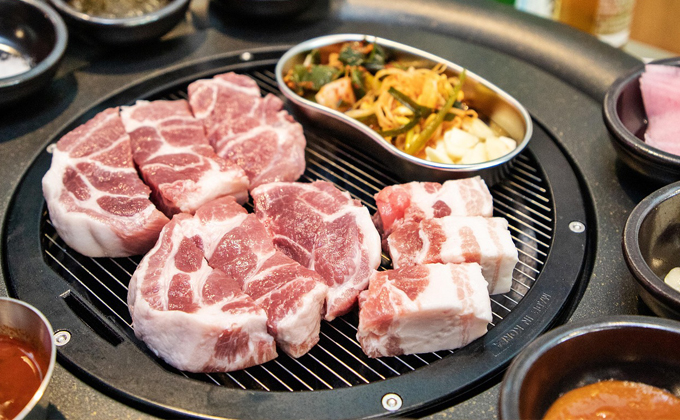
Dining Tips to Keep in Mind
At Samgyeopsal restaurants, the side dishes provided—such as lettuce, perilla leaves, and Ssamjang—are mostly available for infinite refills at no extra cost. If you run out, feel free to comfortably ask the staff for more.
However, if you have a travel companion who is a strict vegetarian or someone who does not eat pork due to specific religious reasons, restaurant choices can become very limited. Therefore, it is necessary to consider the composition of your travel team and coordinate the menu in advance.
Key Takeaways
- It showcases Korea's unique local dining culture of grilling meat on a tabletop grill, making lettuce wraps, and conversing.
- Boasting a perfect ratio of lean meat and fat, it offers an extreme savory flavor that is crispy on the outside and juicy on the inside.
- The core of the gastronomy is the 'Ssam' method: placing meat, grilled garlic, kimchi, and Ssamjang on a lettuce leaf and eating it in one massive bite.
- Finishing the meal with 'Fried rice' (Bokkeumbap), stir-fried on the grill with leftover pork fat and meat, is an absolute dining rule for Koreans.
- The smell of meat can easily soak into your clothes, so it is recommended to wear comfortable attire and store your outerwear in the provided storage chairs.