
The Ultimate Guide to Kimchi-jjigae: Red, Spicy Korean Comfort That Warms the Soul
The absolute number one food Koreans crave upon arriving at the airport after a business trip or a long journey overseas is 'Kimchi-jjigae', bubbling fiercely in a hot earthen pot.
With its broth based on 'Kimchi'—the fermented food that has become a global symbol of healthy K-Food—this stew is an irreplaceable daily staple that appears most frequently on Korean dining tables. We invite you to experience the authentic Korean taste: a true soul food that melts bodies frozen by bitter cold or comforts exhausted spirits with its fiery, red broth.
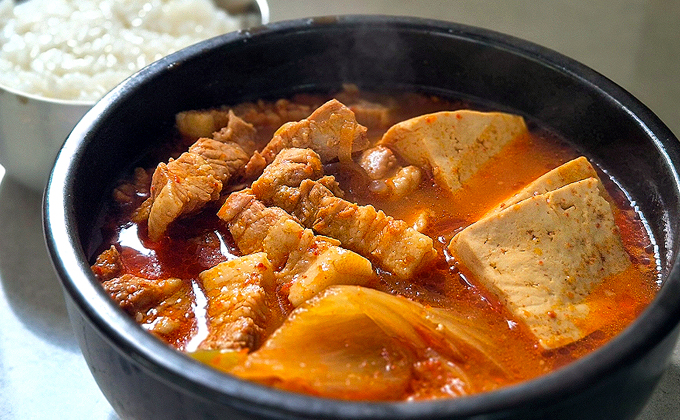
A Magical Stew Created by Fully Fermented 'Aged Kimchi'
The birth of this intense, iconic Korean stew stems from the 'frugal wisdom' of commoners in times of poverty. In the past, Koreans would make massive amounts of kimchi to survive the harsh winters. As time passed, the remaining kimchi would reach the peak of fermentation, turning into intensely sour 'Aged kimchi' (Muk-eun-ji).
Instead of throwing away this kimchi that was too sour to eat raw, they boiled it thoroughly with easy-to-find pork fat or meat scraps, which became the original form of Kimchi-jjigae. As the extremely sour, over-ripened kimchi met the savory fat of the pork, it miraculously created a deep umami flavor, evolving into the greatest Korean-style stew that triumphed over a barren environment.
The Harmony of Tangy Sourness and Heavy Umami
Foreign tourists tasting Kimchi-jjigae for the first time might be surprised by the unique, 'deep sourness' that strikes the tongue. This is not the artificial acidity of vinegar, but rather a refreshing, natural tanginess produced by the fermentation of lactobacillus in the kimchi.
The perfect partner that gently embraces this sharp acidity is the 'Pork fat', which renders out from the thickly sliced pork belly or neck meat. The savory oil seeps into the broth, mixing with the acidity like a tug-of-war, ultimately exploding into the ultimate 'Umami'. Added to this is the pale, soft tofu, which completes an artistic balance of textures.
A Practical Gourmet Course from a Traveler's Perspective
Unlike clear Western soups, the level of satisfaction you get from a Korean jjigae (stew) completely changes depending on how you eat it.
A Hearty Meal at a Local Neighborhood Diner (Baekban-jip)
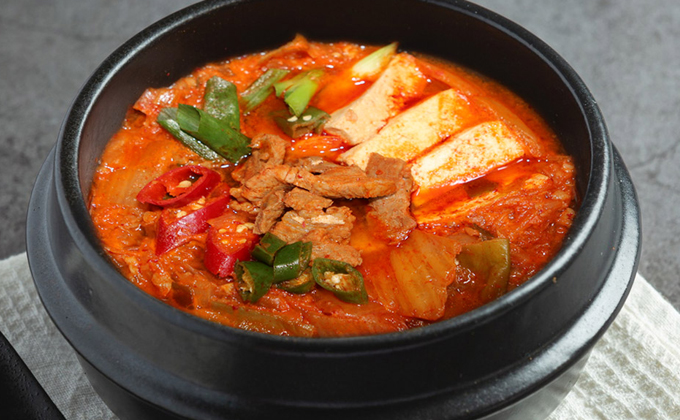
Rather than seeking out famous, glamorous mega-restaurants, look for small, shabby 'Taxi driver diners' (Gisa-sikdang) or 'Home-style diners' (Baekban-jip) tucked away at the corners of alleyways. The rustic Kimchi-jjigae served in a large nickel-silver pot or a black earthen pot is the true standard of the meals locals eat every day. The prices are affordable, and they serve a variety of side dishes, making it a great way to deeply experience everyday Korean life.
The Ultimate Mixing of Broth and White Rice
Kimchi-jjigae is never a dish where you just scoop up the broth with a spoon like soup. It must absolutely be paired with freshly cooked white rice to be complete. Scoop up a generous amount of the thick, red stew broth and mix it well into your rice. Stacking a piece of soft tofu, some meat, and a piece of well-boiled kimchi onto a spoonful of rice, and eating it in one massive bite, is the secret to enjoying a true 'Rice thief' (a dish so delicious it makes your rice disappear).
Plump Rolled Omelet to Tame the Heat
The unique spiciness of Kimchi-jjigae can be somewhat stimulating at first. When this happens, try ordering a plump, soft 'Rolled omelet' (Gyeran-mari) as an additional side dish. The fluffy and mildly savory egg acts as the ultimate relief pitcher, gently putting out the spicy fire in your mouth.
Dining Tips to Keep in Mind
Kimchi-jjigae fundamentally contains red chili powder, so it is classified as quite a spicy dish for foreigners. If you are weak to spicy heat, instead of drinking cold water, it is more helpful to increase the ratio of rice and side dishes to neutralize the flavor, which will keep your stomach comfortable.
Additionally, when kimchi is made, 'Fish sauce' (made from anchovies or shrimp) is fundamentally used. Therefore, even if you choose Tuna Kimchi-jjigae instead of pork, seafood components will still remain in the broth base. Strict vegans or those with seafood allergies must exercise caution.
Key Takeaways
- It is the most everyday soul food for Koreans, blending the tangy sourness of long-fermented aged kimchi with the spiciness of red chili powder.
- Boiling sour kimchi thoroughly with pork fat or canned tuna brilliantly balances a deep and heavy umami flavor.
- Rather than just sipping the broth, its true charm shines when you pour the spicy stew over white rice and mix it all together.
- We strongly recommend enjoying a fluffy rolled omelet as a side dish to gently neutralize the spiciness and strong saltiness.
- Note that a strictly vegan version is difficult due to the fish sauce used during fermentation, and you'll get the highest satisfaction tasting it at a local neighborhood diner.