
Seohak-dong Art Village Travel Guide: The Retro Creative Alleys That Echo the Mood of Twenty-Five Twenty-One
If Jeonju Hanok Village shows you the city’s most famous traditional face, Seohak-dong Art Village shows you something more personal: how an older neighborhood can stay lived-in while becoming creatively alive again. Just across the stream from Jeonju’s better-known tourist core, this district is filled with narrow lanes, small studios, galleries, converted homes, cafés, and the slower texture of ordinary daily life.
The area also gained extra attention through Twenty-Five Twenty-One (2022), the Kim Tae-ri and Nam Joo-hyuk drama that peaked at 11.5% nationwide. Its retro sensibility fit Seohak-dong perfectly. Rather than looking polished in a commercial way, the neighborhood still carries an in-between atmosphere: part memory, part reinvention, part local life. That is exactly what makes it appealing.
Why This Area Matters Beyond Pretty Photos
Seohak-dong was once known more as an aging residential area than a tourism destination. Over time, as rents remained relatively affordable, artists began moving in and adapting older buildings into studios, workshops, and cultural spaces. Public urban regeneration efforts later supported that shift, and the result is a neighborhood that feels changed without feeling erased.
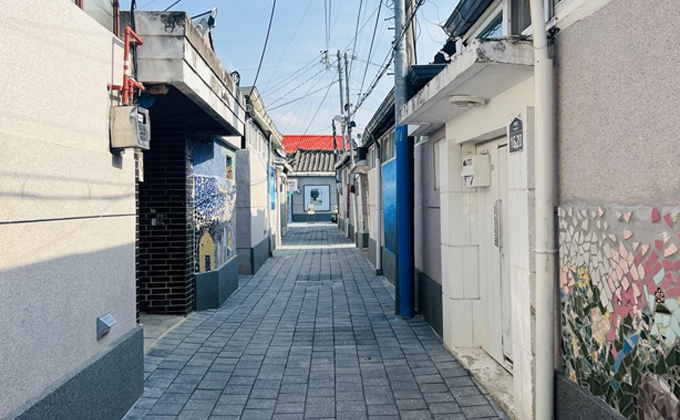
That is an important difference. Seohak-dong does not feel like an artificial arts complex dropped into a city. It still feels like a real neighborhood. Old shops, family homes, murals, workshops, and small exhibition rooms coexist in a way that gives the village its warmth. This is also why it worked so well as a filming area for scenes that needed tenderness, nostalgia, and the feeling of youth taking shape in ordinary places.
How to Explore It Well
This is a place for wandering, not rushing.
Look for retro alley details rather than only major landmarks
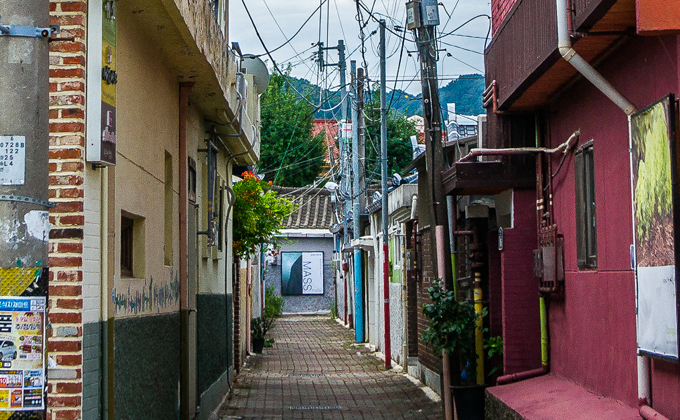
Drama fans often search for traces of the comic-book rental shop setting and the kinds of uphill lanes associated with the show. Even when a specific set element is no longer obvious, the atmosphere remains. Faded walls, potted plants against brick, old signs, and soft afternoon light all contribute to the neighborhood’s appeal. This is a great place for natural snapshots rather than heavily posed photos.
Step into small galleries and studios when they are open
One of Seohak-dong’s biggest pleasures is discovering modest cultural spaces you did not plan to visit. If a gallery door is open, take a quiet look inside. Many spaces show paintings, photography, ceramics, or handcrafted goods by local artists. On weekends, some workshops also offer short one-day classes, which can be a far more memorable souvenir than buying something mass-produced.
Slow down in a truly local café
Instead of large chains, Seohak-dong tends to reward travelers who appreciate places with personality. You may find book cafés, renovated hanok-style coffee shops, or vintage spaces where music matters as much as the menu. Sitting down for a while is part of the experience here. The village makes the most sense once you stop trying to “cover” it and simply let the neighborhood breathe around you.
Things to Know Before You Go
Seohak-dong Art Village is not a sealed-off tourism district. People live here, work here, and create here. That means it deserves the same courtesy you would show in any residential neighborhood. Avoid loud group behavior, do not photograph into private homes or courtyards, and remember that a quiet alley does not automatically mean it is a public photo set.
Also, not every gallery or workshop follows the same schedule. Many smaller spaces are more active from Wednesday through Sunday, while Monday and Tuesday closures are common. If hands-on programs or specific exhibitions matter to you, check in advance. If your goal is simply to walk and absorb the mood, almost any afternoon visit works well.
This is also a strong neighborhood for travelers who already feel overwhelmed by highly concentrated tourist zones. Seohak-dong lets you experience Jeonju in a softer, more conversational way. Instead of moving from one mandatory landmark to the next, you notice handmade signs, open studio windows, local dogs, low walls, and small design decisions that tell you how the neighborhood has changed over time. That slower reading of a place is part of what makes it so rewarding.
Quick Summary
- A creative neighborhood in Jeonju known for its blend of old residential texture and artist-led regeneration.
- Associated with the retro emotional tone of Twenty-Five Twenty-One and ideal for slow alley walks.
- Best enjoyed through wandering, spontaneous gallery visits, and café breaks rather than rushing between fixed attractions.
- A strong example of how Korean urban regeneration can preserve local atmosphere instead of replacing it.
- Since it is still a lived-in neighborhood, quiet manners and respect for private space are essential.
🗺️ Getting There (Google Maps)
▶ Official Jeonju Culture & Tourism Website
▶ Learn More About the Drama on Wikipedia