
Cheongju Jungang Park Travel Guide: A Peaceful Local Park with One of The Glory’s Most Memorable Moods
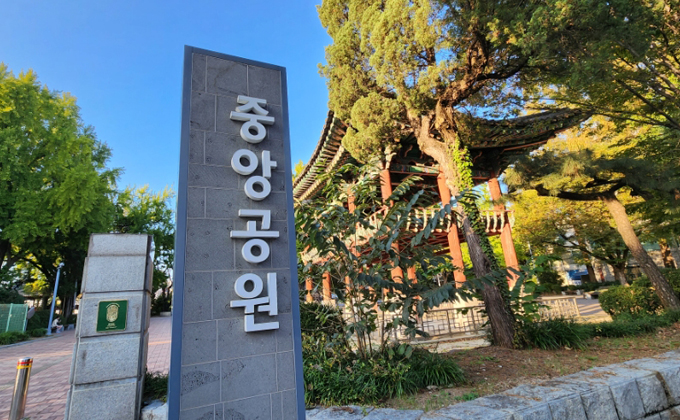
Some of the most striking Korean drama locations are not glamorous at all. They are the opposite: ordinary places where daily life keeps moving, even after television turns them into symbols. Cheongju Jungang Park is exactly that kind of destination. In real life, it is a downtown public park where local residents rest, walk, and gather beneath old trees. On screen, it became one of the most emotionally loaded spaces in The Glory.
For viewers of the Netflix series, the park is linked to the scenes where Moon Dong-eun and Joo Yeo-jeong quietly played Go beneath a towering ginkgo tree. Those scenes felt cold, restrained, and deeply deliberate. Visiting the park in person is interesting precisely because the real atmosphere is not cold at all. It is warm, civic, local, and alive. That contrast is what makes the stop worth making.
Why the Park Feels Bigger Than It Looks on Screen
Jungang Park sits right in central Cheongju, and one of its defining features is the giant old ginkgo tree known as Apgaksu. Tourism information commonly describes it as being close to a thousand years old, with a powerful trunk and a canopy that easily becomes the visual anchor of the entire park. In drama terms, that made it ideal. A tree like this instantly suggests time, patience, endurance, and memory without any dialogue at all.
In The Glory, the park’s benches, shade, and open space were used with remarkable restraint. There is nothing flashy in those scenes, which is exactly why they land so hard. The visual language depends on repetition, stillness, and the public ordinariness of the place. Visiting the park lets you see how Korean productions often create emotional intensity not only through dramatic sets, but by re-framing familiar everyday spaces.
How to Enjoy the Stop Like a Thoughtful Traveler
This is not a place to rush. It works best as a quiet break in the middle of a broader Cheongju walk.
Find the giant ginkgo tree first
Once you enter the park, make your way toward the large old ginkgo that dominates the grounds. This is the visual heart of the location and the easiest place to feel the drama connection. If you visit in autumn, the yellow leaves can make the entire area glow. In other seasons, the tree still carries impressive scale, and the bench area beneath it remains the key emotional reference point for drama fans.
Pair the park with nearby Seongan-gil
Because the park sits close to one of Cheongju’s main downtown commercial areas, it is easy to combine this calm stop with cafés, shopping streets, and a more everyday urban walk. That makes Jungang Park especially convenient for travelers who do not want to spend a whole day on a single filming location. You can pause here, take in the tree and the atmosphere, then transition naturally into the city.
Photograph the setting, not only yourself
This is a place where wide framing works better than close-up posing. Instead of filling the frame with the person, let the tree canopy, benches, and open shaded space remain visible. The strength of the location lies in how the human figure sits within the park’s calm geometry. If you approach it that way, your photos tend to feel more reflective and much closer to the tone that made the site memorable on screen.
Things to Know Before You Go
This is not a controlled fan site. It is an actual public park used by local residents, including many older regulars who come to relax, chat, or play traditional games. That means visitor manners matter more here than at many sightseeing spots. Avoid blocking pathways, filming strangers without permission, or treating benches and rest areas like a private set.
The reward for behaving well is simple: the park remains what made it interesting in the first place. It stays real. If you come in with patience and a quiet attitude, the stop feels much richer than a quick “I saw it” check-in.
Quick Summary
- A key The Glory filming location, especially remembered for the Go scenes beneath the giant ginkgo tree.
- Located in central Cheongju, making it easy to combine with cafés and downtown walking nearby.
- Most famous for Apgaksu, the old ginkgo tree that gives the park both scale and emotional weight.
- Best photographed with wider compositions that show the relationship between the tree, benches, and open space.
- Because it is a real neighborhood park, respectful behavior toward local residents is essential.
🗺️ Getting There (Google Maps)