
Ikseon-dong Hanok Street Travel Guide: A Dense, Dreamy Maze of Hanok Alleys in the Middle of Modern Seoul
When travelers picture “traditional Seoul,” they often imagine grand palace grounds or the spacious hillside lanes of Bukchon. Ikseon-dong offers a very different version of Korean charm. Tucked behind Jongno 3-ga Station, where subway Lines 1, 3, and 5 meet, this neighborhood feels smaller, tighter, busier, and more intimate. Instead of wide historic streets, you get a compact maze of narrow alleys where tiled roofs, warm wood, and modern storefronts press closely together.
That is what makes Ikseon-dong so appealing. Tradition here does not feel frozen behind museum ropes. It feels occupied, adapted, and actively enjoyed. Century-old hanok houses now hold brunch spots, tea rooms, dessert cafes, cocktail bars, and boutique shops. The result is one of the easiest places in Seoul to experience old architectural atmosphere without sacrificing the energy of a current-day neighborhood.
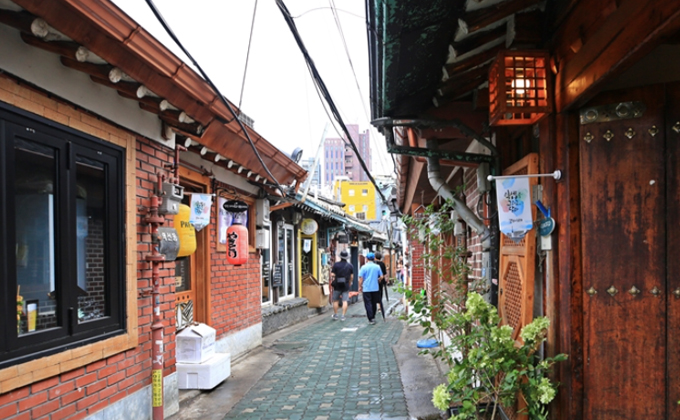
Why this old hanok district feels so fresh
Ikseon-dong developed in the 1920s as a residential hanok cluster for ordinary city residents, which already makes it different from more aristocratic palace-adjacent neighborhoods. The hanok here tend to feel smaller and closer together, with alleyways so narrow that the eaves almost seem to lean toward each other. That physical closeness gives the district a strong sense of texture and discovery. You are always just one doorway away from finding something unexpected.
Its revival happened through careful reuse rather than total replacement. Instead of wiping away the old houses, many businesses kept the rooflines, timber structure, courtyards, and basic footprint, then layered contemporary design inside. That is why Ikseon-dong can feel both romantic and current at the same time. You might walk past a wooden gate and find a chandelier-lit dessert cafe inside, or turn a corner and discover a modern restaurant built around a tiny hanok courtyard. In American travel terms, it feels less like a preserved historic district and more like a living creative neighborhood that just happens to wear traditional architecture beautifully.
How to enjoy Ikseon-dong without rushing it
This is one of Seoul’s best neighborhoods for slowing down and letting curiosity lead.
Wander first, choose later
Ikseon-dong rewards people who do not try to optimize every minute. The alleys are the attraction, not just the businesses inside them. Put the map away for a while and walk without a strict route. Peek through windows. Notice inner courtyards, old wooden lattice doors, and little details in the rooflines. One of the real pleasures here is discovering a place by accident rather than following a viral list exactly.
Try the vintage-photo side of the neighborhood
Some visitors come not only for cafes but also for the retro styling experience. The district has shops that rent early modern Korean and Western-inspired outfits, especially looks associated with the late 19th and early 20th centuries. If that interests you, Ikseon-dong is a particularly good backdrop. The wood textures, tiled roofs, stone pathways, and narrow lanes naturally frame portraits. Even simple photos tend to come out atmospheric because the neighborhood already carries such a strong visual identity.
Connect it with a bigger Jongno walking route
Ikseon-dong works especially well as one piece of a broader central Seoul itinerary. You can pair it with Insadong for crafts and tea culture, with Jongmyo or Changdeokgung for historical depth, or with the Jongno pojangmacha area later in the evening if you want a more local-night-out feel. That flexibility makes it a useful stop for travelers who want tradition, food, and street atmosphere in one walkable area rather than separate subway journeys.
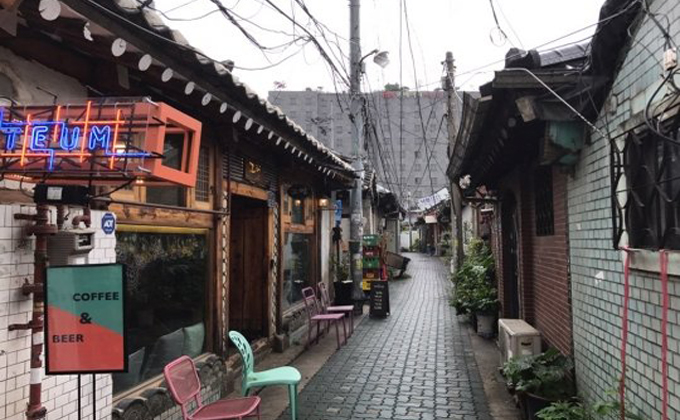
Things to keep in mind before you go
The alleys are very narrow, and that matters more than people expect. On a weekend afternoon, the district can feel packed enough that walking itself becomes slow. If you want calmer photos and a more relaxed sense of the architecture, weekday mornings or later evening hours are usually far better than peak weekend times.
Because so many businesses use large windows or semi-open fronts, it is also important to be respectful when taking photos. A beautiful cafe view from the alley might also include people eating, talking, or resting inside. Try to angle your camera so you are not turning strangers into the main subject of your shot. That kind of basic awareness goes a long way in a place this compact.
Quick takeaways
- Ikseon-dong is one of Seoul’s most atmospheric hanok neighborhoods, known for narrow alleys, traditional rooflines, and highly photogenic cafe culture.
- The district feels lively rather than museum-like because historic hanok structures have been adapted into current-day restaurants, dessert spots, and shops.
- The best way to enjoy it is to wander, look closely, and let the neighborhood surprise you instead of trying to rush from one viral stop to another.
- It pairs easily with Jongno 3-ga, Insadong, and other nearby central Seoul destinations for a full walking day.
- Visit at off-peak hours if possible, and be mindful of people inside glass-fronted shops when taking photos.
🗺️ Getting There (Google Maps)