
Baegun Market Travel Guide: A Neighborhood Seoul Market with Real Warmth, Real Food, and a Trace of Squid Game
Travelers often say they want to see the “real Korea,” but that phrase only becomes useful when you find a place where daily life is still stronger than performance. Baegun Market in Ssangmun-dong is one of those places. It does not feel polished, oversized, or aggressively tourist-ready. Instead, it feels lived-in. The smells, handwritten signs, practical storefronts, and close human scale all make it easy to understand why local markets remain one of the quickest ways to feel a city beyond its landmarks.
The market became more widely recognized after Squid Game entered global pop culture and drew attention to this part of northern Seoul. Yet even without the series connection, Baegun Market would still be worth visiting. It is a good-size neighborhood market for travelers who want a traditional Korean market experience without the overwhelming scale of the city’s largest commercial market districts.
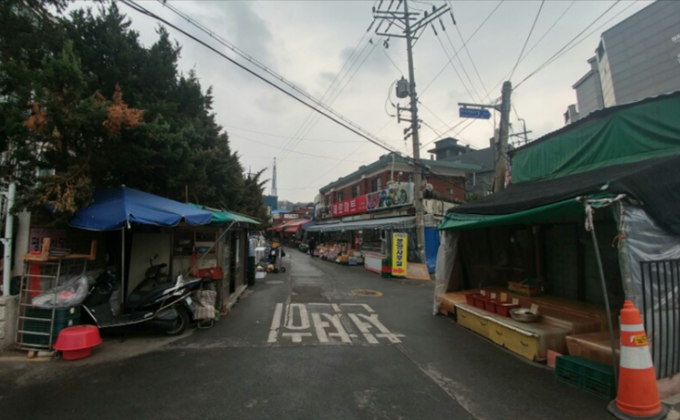
A 1970s-Era Market That Still Feels Personal Rather Than Generic
Baegun Market traces its roots back to the 1970s, when small vendors gradually gathered around the nearby area and created an informal local shopping cluster. Compared with giant covered markets designed to handle major tourist flow, this one still feels intimate. That intimacy matters. You are not only looking at food and goods. You are moving through a social space where residents actually shop, chat, and keep routine alive.
Its connection to Squid Game adds another layer for visitors. Fans often look for the fish shop linked to the series and the broader sense of place associated with Gi-hun’s neighborhood. But the strongest part of the visit is not necessarily a single recognizable corner. It is the overall atmosphere: the modest scale, the practical storefronts, and the feeling that this is a market built for community first.
How to Enjoy the Market Like a Curious Traveler, Not a Rushed Spectator
This stop works best when you keep your expectations realistic and your appetite open.
Treat the market as a snack route, not a one-dish stop
Rather than arriving already full and choosing only one item, come with room to sample several things. Tteokbokki, fried snacks, kimbap, twisted doughnuts, and other low-cost Korean comfort foods are more fun when tried in small portions across multiple stalls. A market like this rewards variety.
Look for the Squid Game reference, then keep walking
Yes, the filming connection is part of the appeal. But if you reduce the market to one photo of one store, you miss what makes it enjoyable. Walk the alleys slowly enough to notice produce, seafood, side dishes, and the rhythm of neighborhood shopping. The drama connection may bring you there, but the market culture is what makes the visit satisfying.
Pair it with Ssangnidan-gil or the Ui-cheon stream path
Once you finish eating and walking through the market, it is easy to continue into nearby areas that balance old and new. The local café zone often called Ssangnidan-gil adds a more current neighborhood vibe, while the Ui-cheon stream path offers a calmer waterside walk. That combination makes the outing feel more complete than a quick market stop alone.

Things to Keep in Mind Before You Go
Small cash can still be useful in neighborhood markets, especially for inexpensive snacks or stalls that prefer quick, simple payment. Many places accept cards, but having a little Korean cash on hand often makes the experience smoother and faster.
Because this is a working neighborhood market, courtesy matters. Avoid blocking the passage while filming, do not photograph people’s faces up close without permission, and remember that vendors are there to run businesses, not to act as props for travel content. A market becomes more welcoming when visitors behave like considerate guests.
Quick takeaways
- Baegun Market offers a friendly traditional market experience in Seoul without the intimidating scale of much bigger markets.
- Its Squid Game connection is real, but the broader neighborhood atmosphere is what makes the visit worthwhile.
- The best way to enjoy it is by sampling several snacks rather than treating it as a single-meal destination.
- Nearby Ssangnidan-gil and the Ui-cheon stream help turn the visit into a relaxed half-day outing.
- Bring some small cash and keep your market manners thoughtful and low-key.