
Bukchon Hanok Village Travel Guide: A Beautiful Historic Quarter That Must Be Visited as Someone’s Real Neighborhood, Not an Open-Air Set
Bukchon Hanok Village is one of the first places many international visitors picture when they imagine traditional Seoul. Waves of tiled roofs, narrow uphill alleys, wooden doors, and skyline views create one of the city’s most recognizable visual scenes. It feels timeless at first glance, which is exactly why so many travelers put it high on their lists.
But Bukchon is not a static heritage display. That is the first and most important fact to understand. It is a living residential area where people still sleep, work, commute, host family, take out trash, and endure the effects of heavy tourism in very direct ways. The beauty of the neighborhood has made it famous, but that same fame has created pressure serious enough that local authorities introduced stricter visitor-control rules in parts of the area. If you go, the correct mindset is not “How much can I get out of this place?” but “How do I enjoy this place without making local life harder?”
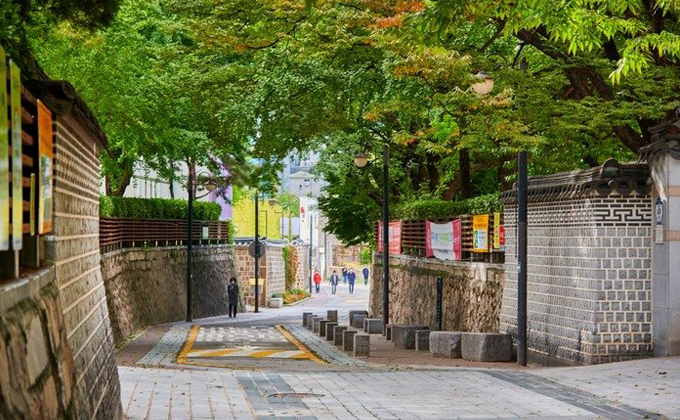
Why Bukchon Still Feels So Powerful
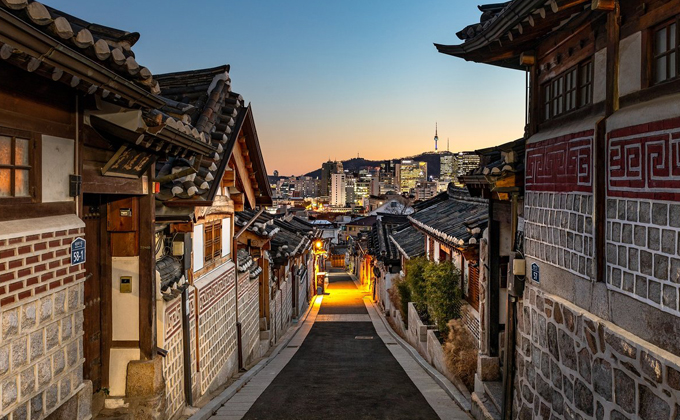
Bukchon sits between Gyeongbokgung Palace and Changdeokgung Palace and has long been associated with upper-status residential history in Seoul. The area’s topography is part of its visual strength. As you move uphill through the alleys, traditional rooflines stack against modern city views in a way that few neighborhoods can replicate. That blend of old and new is one reason the district remains such a powerful symbol of Seoul.
Yet the stronger the visual identity became, the more Bukchon risked being treated like a backdrop rather than a neighborhood. That tension now defines the visitor experience. The village is still worth seeing, but it can only remain worth seeing if travelers accept that access comes with responsibility.
The Most Important Rule: Know the Red Zone Restriction Before You Visit
Travelers should not arrive here relying on outdated assumptions. Parts of Bukchon designated as a special management area, especially the so-called Red Zone around Bukchon-ro 11-gil, operate under time restrictions for tourist visits. In practical terms, sightseeing visits are allowed only during the designated daytime window, and entering the restricted area for tourism outside that period can lead to a fine.
That rule exists because overtourism in Bukchon became severe enough to damage residents’ daily lives. This means the right way to approach Bukchon is to check current guidance first, arrive during permitted hours, and keep your behavior quiet and efficient once you are there. Even during allowed hours, a legal visit is not the same thing as a considerate visit.
How to Enjoy Bukchon Properly and Still Get a Rewarding Experience
When handled thoughtfully, Bukchon remains one of the most beautiful walks in Seoul.
Go early within permitted hours and keep your route focused
Arriving earlier in the allowed daytime window usually makes the walk more comfortable. The light is often good, the alleys feel less congested, and you are less likely to get trapped in a slow-moving crowd of visitors all aiming at the exact same viewpoint.
Take in the roofline views, then keep moving quietly
The famous roofscape viewpoints are genuinely worth seeing. But lingering too long in front of private homes, talking loudly, or turning narrow residential lanes into content-production zones defeats the point of the visit. The best Bukchon walk is surprisingly simple: look carefully, photograph efficiently, and move on.
Link the neighborhood with nearby districts after your Bukchon visit
Bukchon pairs naturally with Samcheong-dong, Insadong, Seochon, and the palace area. That is useful because once your Bukchon walk is done, the day can continue smoothly elsewhere. You do not need to squeeze every possible minute out of the residential core itself.
Things to Keep in Mind Before You Go
Do not assume that “tourist area” means normal tourist behavior is acceptable everywhere. In Bukchon, loud voices, doorway peeking, posed filming in front of private houses, and long photo setups in narrow lanes are exactly the kinds of actions that have caused conflict. The neighborhood is asking visitors to scale down, not scale up.
Footwear matters too. The village streets are full of inclines and uneven surfaces, and a proper walk involves more climbing than many people expect. Comfortable shoes will improve the day far more than fashion-first styling meant only for photos.
Quick takeaways
- Bukchon Hanok Village is one of Seoul’s most beautiful traditional neighborhoods, but it is also an active residential district.
- Parts of the area now operate under tourist time restrictions, especially in the Red Zone management area.
- Respectful, quiet, efficient walking is essential; legality alone is not enough.
- The roofline viewpoints are worth seeing, but the best visit avoids lingering noisily in front of homes.
- Pair Bukchon with nearby palace and café districts rather than overextending your time inside the residential core.
🗺️ Getting There (Google Maps)