
Busan Gamcheon Culture Village Travel Guide: Korea’s “Machu Picchu” Where a Refugee Hillside Turned Into Art
If you want one place that can explain Busan in a single photo, Gamcheon Culture Village is an easy answer. Rows of brightly painted houses stack up the steep hillside like building blocks, creating one of the most instantly recognizable cityscapes in Korea. It is colorful, dramatic, and visually unforgettable in a way that feels different from almost every other neighborhood in the country.
What makes the village even more compelling is that it does not feel like a polished theme park built for tourists. The streets still carry the texture of everyday life in a rough-edged port city. In the murals, stairways, and small sculptures, you can feel the resilience, tenderness, and lived history that often sit underneath Korea’s most emotional films and dramas. This is not just a pretty hill. It is a place where hardship was reshaped into beauty.
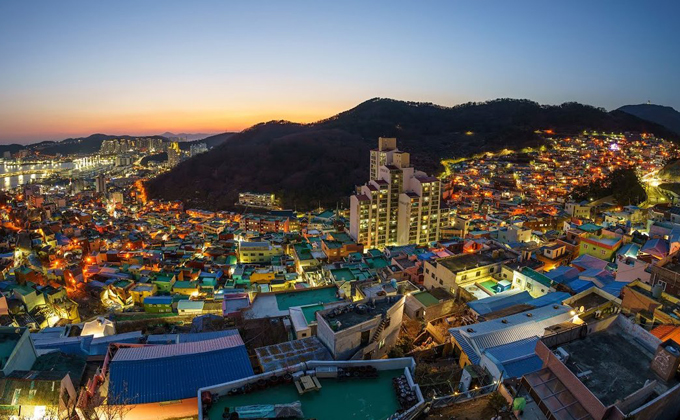
A Hillside Village Where the Pain of War Was Recast as Public Art
According to official tourism information, Gamcheon Culture Village grew in the 1950s when refugees from the Korean War built homes along this steep mountainside in order to survive. The layout that visitors now find so photogenic was born from necessity, not from design. The close-packed homes, narrow stairs, and terraced views all reflect the realities of a community that had to make use of difficult land.
For many years, the neighborhood declined and looked increasingly worn down. Its revival came through village art projects that brought residents together with younger artists, who painted walls, created installations, and transformed empty houses into small cultural spaces. That collaborative renewal changed the image of the area completely. A district shaped by displacement and poverty gradually became one of Busan’s best-known cultural attractions, without losing the emotional weight of its past.
A Practical Walking Route for Travelers Who Want Great Photos and a Better Feel for the Village
The best way to enjoy Gamcheon is to use the village’s changing elevation to your advantage. Rather than rushing through it, treat the neighborhood like a layered walking course where the views keep shifting as you move higher or lower.
Start with the panoramic overlook from the upper side of the village
Head first to a higher point near the entrance or an overlook such as Haneul Maru and take in the village from above. This is where the stacked pastel roofs, the stepped alleys, and the blue water of Busan in the distance all come together in one frame. The broad, watercolor-like view is the signature image of Gamcheon, and it is often enough on its own to justify the trip.
Walk down into the maze-like alleys and stop at the Little Prince photo spot
After enjoying the view, step into the smaller lanes and actually walk the neighborhood at street level. Every turn seems to reveal something charming, whether it is a cat mural, a hand-painted sign, a staircase splashed with color, or a quiet corner with a surprising view. The most famous photo stop is the Little Prince and Desert Fox sculpture looking out over the village. A back-facing shot there, especially with a friend or travel partner, has become one of the classic keepsake photos from Busan.
Take a break in a local café and browse small souvenirs by local creators
Hidden between the lanes are compact cafés created from remodeled homes, many of them with windows or terraces that look straight across the hillside. They are perfect for resting your legs after climbing all those stairs. Along the way, you will also find postcard sets, magnets, and small crafts that reflect the village’s visual identity more nicely than generic souvenir-shop items. It is easy to turn a short stop into a slow and satisfying neighborhood browse.

What to keep in mind before you visit
Gamcheon is famous, but it is still first and foremost a real residential neighborhood where people live their daily lives. Opening gates without permission, climbing onto rooftops for a better angle, peering into private homes, or making loud noise in the alleys is not just rude. It causes real stress for residents. Good travel manners matter here more than at many other photo-heavy destinations.
The village’s tourist information center typically operates from 9:00 a.m. to 6:00 p.m. from March through October, and until 5:00 p.m. from November through February. The village itself is known as a place visitors can walk through more freely, but late-night visits are discouraged out of respect for residents. Because steep stairs and inclines are everywhere, supportive walking shoes are not optional. They make the difference between a pleasant visit and an exhausting one.
Quick recap
- Gamcheon Culture Village began as a Korean War refugee community built on a steep hillside and later evolved into one of Busan’s most memorable cultural districts.
- The most rewarding first stop is a higher overlook where pastel rooftops, stepped houses, and the distant sea come together in one panoramic shot.
- After that, the real fun comes from walking the narrow lanes, spotting murals, and taking a classic photo at the Little Prince sculpture.
- Because people still live here, quiet and respectful behavior is essential throughout the village.
- Wear comfortable shoes, visit in daylight, and keep the visitor center’s seasonal closing time in mind when planning your route.