
Incheon Open Port Culture District Travel Guide: A Chillingly Beautiful Walk Through the Streets Left Behind by Korea’s 1883 Opening
If your image of Korea is limited to glittering skyscrapers and royal palaces, there is an important layer of history you are still missing. In Incheon, where foreign trade and foreign influence entered with particular force in the late nineteenth century, you can walk through streets that feel very different from central Seoul and very different from the country’s palace-centered heritage sites.
The Open Port Culture District in Jung-gu has an almost time-shifted atmosphere. Western-style stone buildings, brick warehouses, and traces of Japanese wooden architecture remain concentrated in one walkable area. Instead of the polished energy of a trendy district, the neighborhood offers a heavier, quieter, more reflective charm. It is ideal for travelers who like history, layered architecture, and city walks with a strong sense of narrative.
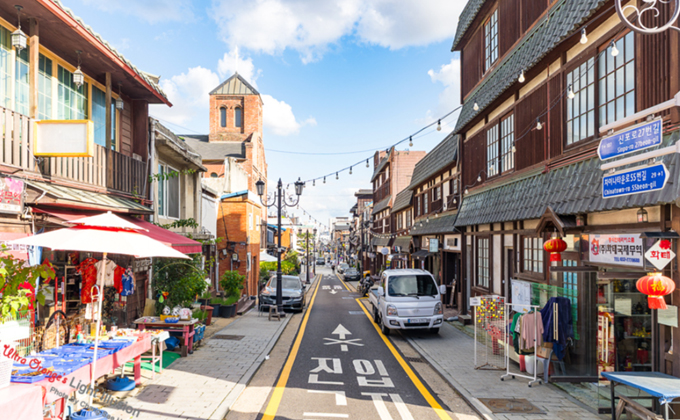
An open-air museum shaped by the waves of 1883
Tourism information from Incheon and national sources ties the district to the official opening of Incheon Port in 1883, when the area around Jemulpo became a gateway for foreign trade, residency, and diplomatic presence. Concession zones were established, and foreign consulates, trading companies, banks, and social venues took root in the area.
That history is still visible in the built environment. As you walk, you can find former bank buildings made of sturdy stone, along with preserved brick and masonry structures that feel markedly different from standard Korean urban streetscapes. Places such as Jemulpo Club and the warehouse-like spaces of Incheon Art Platform help compress multiple strands of modern history into a relatively compact district. The result is a neighborhood that genuinely functions like an open-air museum rather than merely referencing its past.
A practical walking plan for travelers who want more than one photo stop
This district works best as a connected route. The pleasure comes from moving through historical layers instead of checking off a single landmark.
Focus on architectural details instead of only wide building shots
Rather than only photographing buildings straight-on, try moving closer and paying attention to details such as arched windows, stone textures, iron gates, weathered brick, and fading masonry. These details carry much of the atmosphere. If you enjoy vintage-style imagery, period-inspired clothing or a retro filter can work well here without feeling forced, because the architectural setting already does most of the mood-building for you.
Try a one-hour heritage walk that climbs gradually toward Jayu Park
A practical route is to begin near Incheon Station, pass through the old consular and banking areas, and continue uphill toward Jayu Park, often described as Korea’s first Western-style park. Along the way, the changing elevation helps reveal the port-city setting more clearly, and the walk naturally ties together architecture, history, and broader urban views.
Pair the district with nearby Chinatown and a café inside a repurposed old house
One of the area’s pleasures is how dramatically the atmosphere shifts when you step into neighboring Incheon Chinatown. After a heritage walk, many travelers enjoy eating jjajangmyeon or other Chinese-Korean dishes there, then returning to quieter lanes for coffee or tea in a café repurposed from an older building. That combination of port history, architecture, and food makes the district feel especially rich as a half-day outing.
What to keep in mind before you visit
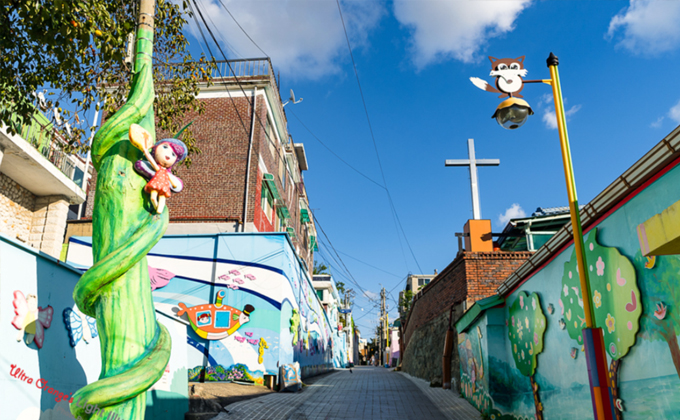
While the main roads are straightforward, some side streets are narrow and still carry vehicle traffic, so it is important to stay alert when stopping for photos. It is easy to back into the road while concentrating on architecture if you are not paying attention.
Also, some of the most interesting heritage buildings now function as museums or exhibition spaces, which means hours, admission rules, or closure days can apply. Monday closures are common at cultural institutions in Korea, so checking basic opening information before planning indoor visits can save time.
Quick recap
- The Open Port Culture District preserves the atmosphere of the era that followed Incheon’s 1883 opening to foreign trade.
- Stone banks, brick warehouses, and historical club buildings make the area feel like a compact open-air museum of modern Korean history.
- The district is better experienced as a connected walking course than as a single photo stop.
- Pairing it with Jayu Park and Incheon Chinatown makes for a much richer half-day route.
- Watch for vehicles in narrower lanes, and confirm museum-style building hours if you want to go inside.